


Oil, Gas, and Wars: The Caspian Sea at a Crossroads


For centuries, the Caspian Sea has occupied a peculiar position. Geographically at the margins of Europe, it was long regarded as a quiet border region where little of significance occurred. This, however, is now changing.
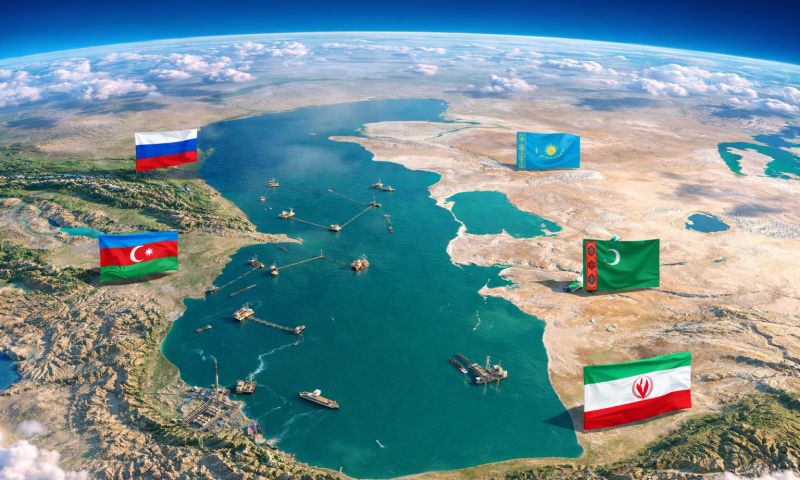
Technically speaking, as most diligent school children will point out, the Caspian Sea is not a sea, but a lake. This is not just a “fun fact”, but has legal implications too. Covering roughly 371,000 square kilometers, the Caspian is the largest enclosed inland body of water on Earth, larger than the five North American Great Lakes combined. Its location places it at the intersection of several geopolitical zones: the Eurasian steppe to the north, the Caucasus to the west, Central Asia to the east and the Iranian plateau to the south. But the strategic importance of the basin does not derive from geography alone. Today it stems from the hydrocarbons in and around the Caspian and from the transport corridors that connect the region to surrounding markets.
The five littoral states — Russia, Iran, Kazakhstan, Turkmenistan and Azerbaijan — together control one of the largest concentrations of oil and gas resources outside the Middle East. Estimates place the basin’s proved and probable reserves at roughly 48–50 billion barrels of oil and about 8–8.5 trillion cubic meters of natural gas. In global terms this is substantial, although not decisive. For comparison, Venezuela, which possesses the world’s largest proven oil reserves, holds more than 300 billion barrels. Russia alone possesses roughly 60–100 billion barrels of proven oil reserves and the largest natural gas reserves on the planet, estimated at approximately 48 trillion cubic meters. The Caspian basin therefore does not rival the Persian Gulf in abundance of natural resources, but its weight has grown in recent years.
Russia’s presence in the region dates back to the sixteenth century. When Ivan IV conquered the Astrakhan Khanate in 1556, Moscow gained control of the lower Volga and access to the Caspian Sea. From that moment onward the basin became an interface between the Russian state and Persia. During the eighteenth and nineteenth centuries a series of Russo-Persian wars gradually shifted the balance of power in the Caucasus. By the early nineteenth century Russia had secured control of large parts of the region through treaties such as Gulistan (1813) and Turkmenchay (1828), which formalized the decline of Persian influence north of the Aras River. The northern Caspian was thus incorporated into the Russian Empire, while the southern shore remained under Persian authority.
For most of the twentieth century the Caspian functioned essentially as a Soviet-Iranian lake, a bilateral space shared between the Soviet Union and Iran. Agreements signed in 1921 (Russo-Persian Treaty of Friendship) and 1940 (Treaty of Commerce and Navigation) regulated navigation and fishing rights. But they left the question of offshore resources largely unresolved. The oil fields of Azerbaijan were the stuff of legend and were later coveted by Nazi Germany too, but beyond Baku hydrocarbon exploration in the Caspian remained limited. The legal status of the seabed attracted little attention.
This situation changed abruptly after the collapse of the Soviet Union in 1991. Three new states — Kazakhstan, Azerbaijan and Turkmenistan — suddenly emerged on the Caspian coast, each claiming jurisdiction over newly discovered offshore energy deposits that had never been clearly divided. The problem of how to delimit the seabed quickly became one of the most complex legal disputes in post-Soviet Eurasia.
Two competing principles shaped the negotiations. Iran and Russia favoured a condominium model under which the sea would be jointly administered by all littoral states. Such an arrangement would have constrained unilateral exploitation of offshore oil and gas fields. Azerbaijan, Kazakhstan and Turkmenistan instead argued that the seabed should be divided into national sectors according to modified median lines, allowing each country to develop resources independently. Russia’s position gradually changed and in 1996 it agreed on the establishment of jurisdictional areas forty-five nautical miles for each littoral state and to acknowledge the rights to exploit petroleum in areas in each country’s national sector.
The matter of extraction rights was finally resolved in 2018 with the signing of the Convention on the Legal Status of the Caspian Sea in the Kazakh port city of Aktau, after twenty-two years of negotiations and more than fifty meetings between the countries: “The sovereignty of each Party shall extend beyond its land territory and internal waters to the adjacent sea belt called territorial waters, as well as to the seabed and subsoil thereof, and the airspace over it.”
There was also one important provision with regard to security. Military forces operating in the basin are restricted to the five littoral states, effectively excluding external naval powers and preventing the Caspian from becoming an arena of direct NATO–Russia competition. Turkey, however, challenged this settlement. Turkish military cooperation with Caspian states — Azerbaijan, Kazakhstan, and Turkmenistan, which Turkey regards as part of the “Turkish world” — has included support for the development and modernization of their naval forces, including shipbuilding and training, which has been interpreted as part of a broader Turkish strategy to expand its influence in the region’s maritime security architecture and reduce Russia’s traditional dominance. Turkey has encouraged and assisted Turkic littoral states in strengthening their navies, and this deepening cooperation has been described as contributing to a shift in regional naval balance. Last year, however, in November, the five Caspian littoral states signed an agreement that rejected any foreign military presence in the Caspian and committed the parties to increased naval cooperation.
The New Rich
The economic transformation of the region accelerated once large offshore hydrocarbon fields began to be developed in the 1990s and 2000s. Kazakhstan has become the largest oil producer in the basin, with national crude output approaching 1.8–1.9 million barrels per day. Two giant fields account for a significant share of this production. The Tengiz field, operated by the Tengizchevroil consortium led by Chevron with partners including ExxonMobil and KazMunayGas, contains an estimated six to nine billion barrels of recoverable oil (which makes it the sixth-largest oil field in the world) and produces roughly 600,000 barrels per day. Even larger in geological terms is the offshore Kashagan field in the northern Caspian. Operated by an international consortium including Eni, TotalEnergies, Shell and China National Petroleum Corporation, Kashagan is one of the largest oil discoveries made anywhere in the world since the 1960s, with recoverable reserves estimated at roughly thirteen billion barrels.
Azerbaijan’s offshore sector has also played a decisive role in the post-Soviet transformation of the Caspian energy landscape. The Azeri–Chirag–Gunashli complex, located 120 km off Azerbaijan’s coastline, is operated by the Azeri state oil company SOCAR and BP, and forms the core of the country’s oil industry. Since production began in the late 1990s the cluster has generated billions of barrels of crude and at its peak produced more than 800,000 barrels per day. For Europe, Azerbaijan is also the principal natural gas exporter of the Caspian basin thanks to the giant Shah Deniz field. With reserves estimated at around 1.2 trillion cubic meters, Shah Deniz provides the supply base for the pipeline network that links the Caspian directly to European markets.
In the other direction, Turkmenistan’s natural export market is China. The country possesses proven gas reserves estimated at roughly 11–13 trillion cubic meters, among the largest in the world. The Galkynysh and its satellite fields may contain more than twenty seven trillion cubic meters of gas, placing it among the largest gas fields ever discovered. Turkmenistan’s geographic position — landlocked and separated from major markets by vast distances — has historically constrained its export options.
Unlike the oil states of the Persian Gulf, the Caspian basin has no direct maritime outlet to the open ocean. Hydrocarbons extracted from the region must therefore move through long pipeline systems crossing politically sensitive territory before reaching international markets. Pipelines in this context are not merely infrastructure. They are the raw material of geopolitics.
Infrastructure and markets
Stretching nearly 1,800 kilometers from Azerbaijan through Georgia to the Turkish Mediterranean port of Ceyhan, the Baku–Tbilisi–Ceyhan has a capacity of roughly one million barrels per day. Its strategic significance lies in the fact that it bypasses both Russia and Iran, allowing Caspian oil to reach global markets without passing through the territory of either country. The pipeline was supported by the United States during the early 2000s as part of a broader effort to diversify energy supply routes from the former Soviet space.

Kazakhstan’s principal export route, by contrast, runs through Russia. The Caspian Pipeline line connects the oil fields of western Kazakhstan to the Russian Black Sea port of Novorossiysk. With a capacity of roughly 1.4 million barrels per day, it carries the majority of Kazakhstan’s crude exports. Although the pipeline is operated by an international consortium that includes Western oil companies, the Russian pipeline operator Transneft retains a major shareholding, ensuring that Moscow continues to exercise influence over the region’s main export corridor.
Natural gas exports from the Caspian basin have become increasingly important in Europe’s search for diversified energy suppliers. Azerbaijani gas reaches European markets through the Southern Gas Corridor, completed in 2020, a pipeline system composed of the South Caucasus Pipeline, the Trans‑Anatolian Natural Gas Pipeline (TANAP) and the Trans Adriatic Pipeline. The system currently transports roughly sixteen billion cubic meters of gas annually, of which around ten billion cubic meters reach the European Union while about six billion cubic meters are delivered to Turkey. TANAP itself has a capacity of about 16 billion cm per year, with expansion plans that could significantly increase throughput in the future.
Through the Central Asia–China Gas Pipeline network, Turkmen gas flows eastward across Uzbekistan and Kazakhstan into western China. The system has a design capacity exceeding fifty billion cubic meters annually.
Despite the existence of these pipelines, one of the most strategically significant projects in the region remains hypothetical. The proposed Trans-Caspian Gas Pipeline would connect Turkmenistan’s gas reserves to Azerbaijan’s export infrastructure by crossing the Caspian seabed. In theory such a pipeline could transport up to thirty billion cubic meters of gas annually toward Europe through the Southern Gas Corridor. Although the 2018 Caspian Convention removed some legal obstacles by allowing pipelines to be built with the consent of only the directly affected states, the project continues to face political opposition from both Russia and Iran, which view it as a potential challenge to their influence.
Energy infrastructure is only one dimension of the Caspian’s strategic transformation. The basin is also becoming an increasingly important node in Eurasian transport networks linking Europe, the Middle East and Asia. One of the most prominent initiatives is the Trans-Caspian International Transport Route, often described as the Middle Corridor. This system connects western China to Europe through Kazakhstan, the Caspian Sea, Azerbaijan, Georgia and Turkey. Cargo volumes along the route have increased significantly since 2022 as sanctions and security risks associated with the war in Ukraine disrupted traditional rail routes crossing Russian territory.
A Passage to India
The International North–South Transport Corridor (INSTC) is a real multimodal freight network of about 7,200 km linking India, Iran and Russia via sea, rail and road to connect Mumbai with Moscow and northern Eurasia, designed to shorten transit times and lower transport costs compared with traditional routes via the Suez Canal. It was launched by India, Iran and Russia in 2000 and later expanded to include a number of neighbouring states, and freight currently moves along complementary sea and land segments through the Caspian basin and Central Asia.

In recent years trade using the corridor has grown rapidly. According to official statements, the volume of goods shipped between India and Russia via the INSTC approximately doubled in 2024 as both sides expanded exports and improved logistics, while net transport costs on some sections reportedly fell sharply and container traffic and vessel calls rose. Indian exports moving this way include construction materials, clothing, rice and plastics, and Russian shipments via the corridor have included paper products, lumber and other industrial and food goods. Bilateral trade overall reached record highs in 2024, with India aiming to use this connectivity to reduce its trade deficit with Russia and diversify trade flows.
The corridor’s practical importance lies in offering an alternative to longer sea routes: operators report that delivery times between key ports along the INSTC can be significantly lower than via Suez, and infrastructure upgrades — including port expansion on the Caspian and new rail links through Iran — are intended to increase capacity and reliability. While energy exports still move predominantly by conventional maritime routes, the INSTC is being positioned as a strategic logistics link for a wider range of manufactured and agricultural goods, and ongoing development continues to shape its role in Russian‑Indian trade.
A Complex Balance of Forces
Power dynamics in the Caspian remain relatively restrained compared with other maritime regions, yet strategic competition is increasing. Russia has long been the largest naval force in the basin through its Caspian Flotilla, headquartered in Astrakhan and Kaspiysk. The flotilla demonstrated its operational reach in 2015 when Russian warships for the time launched Kalibr cruise missiles from the Caspian toward targets in Syria. Subsequently many strikes on Ukraine have come from the Caspian.
Other coastal states have expanded their naval capabilities primarily to protect offshore energy installations and maritime transport routes. In January this year, however, Russian oil rigs in the Caspian became targets of Ukrainian strikes.
Caspian geopolitics is not only about raw power though. Relations between Russia and Azerbaijan illustrate the fluid character of politics in the region. The relationship between Russia and Azerbaijan used to revolve around pragmatism, logistics and transit infrastructure rather than ideological alignment. Azerbaijan occupies a key position in the development of the North–South Transport Corridor linking Russia to Iran and the Persian Gulf. At the same time Baku’s growing integration with Turkey and its role as a supplier of natural gas to Europe reduced Russia’s traditional influence in the South Caucasus.
In December 2024, near Grozny, an Azerbaijan Airlines passenger aircraft was mistakenly struck by Russian air defenses; though the damaged plane managed to reach the vicinity of Aktau on the Caspian coast, its emergency landing failed, and 38 people were killed in the crash. The incident became the immediate trigger for the most severe crisis in relations between Russia and Azerbaijan in decades. Azerbaijan’s President Ilham Aliyev publicly accused Moscow of responsibility and deliberate obfuscation. In the months that followed, Baku closed Russian cultural institutions, and adopted an increasingly confrontational diplomatic tone. The situation escalated further in 2025 when Russian law enforcement targeted ethnic Azerbaijanis, with detainee deaths in custody triggering retaliatory raids by Azerbaijani authorities against Russian state-affiliated structures in Baku. Azerbaijan moved from cautious balancing to open defiance.
Yet the confrontation proved short-lived: by October 2025, a direct meeting between Vladimir Putin and Ilham Aliyev led to a formal de-escalation, with Moscow acknowledging responsibility for the plane incident and offering compensation, while both sides quietly rolled back retaliatory measures. Rather than a rupture, the crisis resulted in a pragmatic reset: core strategic links were deliberately preserved even at the height of tensions, indicating mutual limits to escalation. By early 2026, relations had stabilized at a lower but functional level, characterized less by trust than by managed coexistence with continued interdependence.
Baku’s willingness to confront Moscow and then restore working relations underscored its growing strategic autonomy — an autonomy Azerbaijan has also asserted in its more complex and structurally contentious relationship with Iran. Tensions between Azerbaijan and Iran stem largely from historical grievances and, more recently, from competing visions of regional connectivity. Azerbaijan and Turkey support the creation of a land route across southern Armenia linking mainland Azerbaijan to the exclave of Nakhchivan and onward to Turkey. Iran opposes this plan because it could diminish the country’s importance as a transit corridor between the Caucasus and the Middle East. Despite political friction, cooperation did persist in several practical areas, particularly in transport projects associated with the North–South corridor. At least until the latest Iran war, which saw Azerbaijan as the target of retaliatory strikes by Iran for its support of Israel. About 40% of Israel’s oil comes from Azerbaijan.
The Turkey factor
The relationship between Russia and Iran has deepened considerably in recent years as both countries confront extensive Western sanctions. Moscow and Tehran have developed a pragmatic partnership centered on energy trade, military technology and transport infrastructure. But the partnership has limits too.
The other big player in the region is Turkey. In spite of the many differences, Turkey has been able to maintain pragmatic relations both with Iran and Russia. Although the country has no coastline on the Caspian Sea, it has become one of the most influential external actors in the Caspian. Ankara views Azerbaijan as a strategic partner and seeks to position itself as the western outlet for Caspian hydrocarbons. Azerbaijani gas reaches Europe through the Trans-Anatolian pipeline that crosses Turkish territory before connecting to the Trans Adriatic Pipeline. But for now the volumes delivered through this corridor remain modest compared with the gas flows that Russia once supplied to the European Union.
The Caspian Sea has thus emerged as a strategic chessboard. Azerbaijan, Kazakhstan, and Turkmenistan navigate a web of dependencies, balancing Russian, Iranian, Turkish, Chinese, and European interests, while Iran and Russia assert their enduring presence through sanctions‑resistant partnerships and military leverage. Even without an open ocean outlet, the basin has become a fulcrum of Eurasian connectivity. In this volatile space, alliances are pragmatic and fluid, rivalries are subtle but persistent, and legal frameworks provide only a veneer of stability. The Caspian is no longer a quiet lake on the map.
«Oil, Gas, and Wars: The Caspian Sea at a Crossroads»