


Russia to the Rescue


The War That Breaks the System
As the United States enters the fourth week of its disastrous war of choice with Iran, what was a regional conflagration has expanded into a conflict of global proportions, with world energy markets reeling from the consequence of violence on critical energy facilities and infrastructure, and the resulting detrimental impact on world energy security. Europe is in a panic, while Asia is reeling, desperately searching for alternative suppliers of energy as their Middle Eastern contracts burn along with the oil and gas fields that produced the needed resource, and the ships that were to bring them to market.
That this would be the result of America’s grotesque miscalculation in deciding, along with Israel, to launch a surprise attack on Iran lacking in any legal, ethical, or intellectual justification escaped those who perpetrated this illegal war of aggression, and those who sat back idly for months as the aggressors loudly and actively announced their intention. The silence of Europe and Asia make them culpable as co-conspirators, their inaction only reinforcing the perception of legitimacy that attached to the false claims made by both Israel and the United States about the nature of the threat posed by Iran that would justify launching a preemptive attack void of any effort to couch it in terms of international law. The absolute lawless nature of the US-Israeli aggression has led many observers to lament that the notion of international law has been forfeit, and that the world is now governed by little more that the law of the jungle.
Escalation, Chaos, and Russian Gains
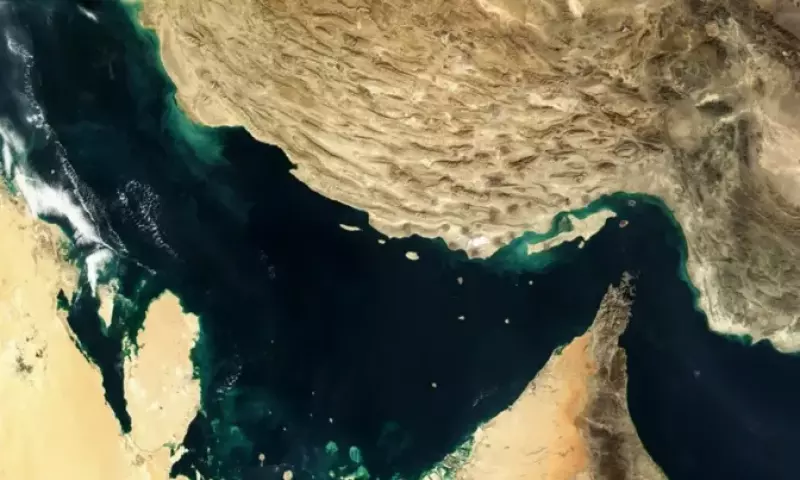
Lawlessness begets chaos, and chaos breeds disaster, especially in the highly regulated world of global energy security. As the US-Israeli war with Iran enters its fourth week, some things have become crystal clear. First and foremost, the United States and Israel have not achieved any of their objectives in launching this conflict, in particular those linked to regime change inside Iran and the suppression and elimination of Iran’s ability to launch missile and drone attacks. As US and Israeli stockpiles of precision-guided standoff munitions and missile interceptors rapidly depletes, Iran’s ability to stockpile a seemingly bottomless pit of advanced missiles and drones that have brought devastation to Israel, US regional military and diplomatic installations, and critical infrastructure of the Gulf Arab nations who had allowed the US to use their territory to prepare for and instigate the attacks on Iran. Moreover, after decades of declaring that the US Navy would guarantee that the strategically vital Strait of Hormuz would never be shut down by Iran, Iran has established absolute control over the passage of shipping through this narrow stretch of water, allowing ships that ae from allied nations or which have negotiated their passage with Iran to pass through unmolested, while attacking and sinking those from hostile nations or which seek transit without prior coordination.
The US-Israeli air campaign never achieved the strategic impact it desired, and has now devolved into a blind orgy of death and destruction as the US and Israel seek to hold the Iranian people accountable for the resilience of their leadership and military through actions that can only be described as collective punishment, itself a war crime. Having, too late, recognized the folly of his actions, President Trump has been positioning himself to simply declare victory and walk away from the conflict. Israel, in an effort to prevent the US from simply walking away, launched a precipitous attack on Iran’s largest gas field, prompting Iran to retaliate against the oil and gas production and storage infrastructure of the Gulf Arab states, triggering the global meltdown in the energy marketplace. Now the US has put Special Operations Forces on the ground inside Iran to look for the elusive Iranian missile launchers, and is deploying additional ground forced, including a Marine Expeditionary Unit, to give US commanders more options when it comes to doing what Trump had previously said he would never do—put US boot on the ground inside Iran.
The US-Israeli war with Iran is spinning out of control, leading to the kind of existential escalation that could conceivably result in the use of tactical nuclear weapons by the US and Israel should they prove unable to stop the Iranian retaliatory drone and missile attacks on Israel and the Gulf Arab states. While the US contemplates sending more military resources into the Middle East, and Israel expands the fighting by invading Lebanon for the purpose of defeating Hezbollah, the United States watches as its entire strategy of economically strangling Russia because of Russia’s ongoing Special Military Operation in Ukraine collapses as the US and the rest of the world struggle to adjust to the cataclysm that has struck global energy supplies. Here, Russia has emerged as the singular benefactor of an otherwise catastrophic consequence of war. The US was compelled to lift the ban of buying Russian oil it had imposed through sanctions, enabling Russia to access critical Chinese and Indian markets that had been shut down through US pressure, and negotiate access to other Asian markets that had suddenly opened up because Middle East suppliers were no longer able to meet demand.
The result is an absolute financial bonanza for Russia as it can rake in record profits, with no end in sight. But the short term gain that Russia is enjoying does not compensate for the long-term pain that the rest of the world is feeling because of the Iran war. Russian diplomats have long underscored that Russia prefers the predictability of stable geopolitical environments, and as such it would be better for all parties involved—including Russia—for the war in the Persian Gulf to come to a rapid conclusion. However, as things currently stand, such an outcome is not in the cards. Even if the United States could de-link itself from Israel and pursue a separate track of conflict termination, the Iranian government is not inclined to allow this to happen. Like Russia when it comes to the Ukraine conflict, Iran recognizes that a ceasefire that does not address the root causes of the conflict will only lead to renewed conflict down the road, a game plan that only benefits Israel and the US. For Iran to accept conflict termination, it must walk away with results that fundamentally alter the geopolitical landscape in the Middle East. At a very minimum, Iran would require a drastic reduction in the US military presence in the Middle East, perhaps even the total withdrawal of all US military forces and the closure of all US military bases in the region—no more 5th Fleet, CENTCOM forward, or large military liaison missions. Likewise, Iran would require that all sanctions imposed on it over the years be lifted. Iran would also be allowed to retain its ballistic missile programs. Iran would also insist that projects such as the US-backed Abraham Accords and the India-Middle East-European Economic Corridor designed to promote Israeli economic dominance over the region be curtailed, if not eliminated outright, until which time there is a Palestinian State created that meets the needs of the Palestinian people.
Iran has spelled out these demands, and others—such as Iran’s absolute right to enrich uranium and the need for the US and Israel to pay reparations to Iran, in statements from the Iranian Foreign Ministry. The Trump administration has likewise set out its own absolutist terms for conflict termination, which constitute veritable terms of surrender which do not conform with the reality on the ground—similar in many ways to the unrealistic demands made by Ukraine and Europe when it comes to the Special Military Operation.
Russia and the Path to a Grand Bargain
In this environment of extreme demands backed by extreme recalcitrance on the part of all parties to the conflict, Russia emerges as the lone pragmatic player with enough skin in the game as to be able to influence both Iran and the US when it comes to setting out conditions for conflict resolution that could be acceptable to all. At a time when the US is feeling the economic pressure brought on by a global energy crisis triggered by its precipitous decision to go to war with Iran, Russia is uniquely positioned to inject stability into an otherwise shaky market. This alone makes Russia attractive to the US, while at the same time having established itself as a trusted strategic Iranian partner.
Russia is positioned to be able to negotiate a grand bargain with the US by bringing an end to the conflicts in Ukraine and the Middle East on terms which meet both the requirements for causal finality set by Russia and Iran and providing a domestic political boost to Donald Trump by burnishing his self-proclaimed reputation as a peacemaker. The details of such a deal are best left to those negotiating it, but it does not take any stretch of the imagination to envision a Europe where the kind of security framework first proposed by Russia in December 2021 takes hold, and a Middle East free of large-scale US military presence. This would help facilitate the kind of strategic repositioning of US military assets to the Western Hemisphere envisioned in the 2025 National Security Strategy Document, while bringing an end to the energy crisis that threatens global economic stability today. One bone that Russia could throw to the US is the continued primacy of the petrodollar on the world stage, something the current energy crisis threatens.
Pie in the sky? Perhaps. But Russia has a history of being able to take seemingly impossible situations where hate has consumed all parties and transform them into opportunities for mutual peace and prosperity. The Chechen experience stands out in this case. The miracle that Vladimir Putin and Akhmat Kadyrov performed in bringing an end to the Russian-Chechen conflict and enabling a process that has turned Chechnya into a peaceful and prosperous part of the Russian Federation, could happen again if just given a chance. As such, the sooner Putin and Trump could meet to get this grand bargain up and running, the better. With Iran raining devastation down on Israel, and the US threatening to destroy Iranian power plants if the Strait of Hormuz is not opened to all traffic, there simply is no time to spare.
«Russia to the Rescue»