


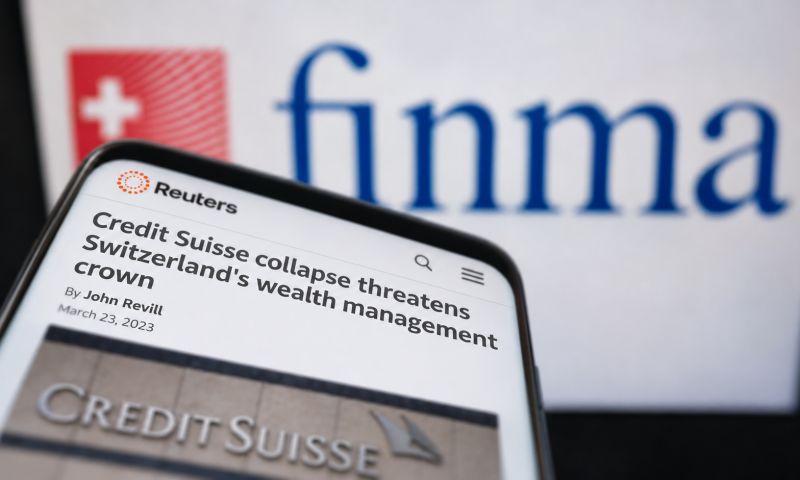
The Total Uselessness of FINMA


When FINMA came for our board
My name is on this piece and my CV is public. Anyone can find out which Swiss bank I chaired and which merger later absorbed it. What the public record does not show is what happened inside the banks in the autumn of 2013, and that is where I want to start. What follows in this section rests on my word.
In August 2013 the US Department of Justice launched its Swiss Bank Program. Banks that feared they had broken American law could pay a fine in exchange for a promise not to be prosecuted. Banks that considered themselves clean could ask for a letter confirming they were not a target. Participation was voluntary.
We refused to take part at all. We had done nothing that warranted paying the United States a single franc, and we saw the program for what we believed it was, a way to make every Swiss bank kneel in turn. We knew the risk. That January, Wegelin, the oldest private bank in Switzerland, had pleaded guilty in New York and ceased to exist. We took the risk deliberately.
But the pressure did not come from Washington. It came from our own supervisor in Bern. The Swiss Financial Market Supervisory Authority (FINMA) threatened to remove our entire board of directors.
We waited, because we had time. Then, all of a sudden, the director who made the threat was gone, his successor Mark Branson did not pursue it, and we got our way. The bank carried on and was left alone. What FINMA might do to you, it turned out, depended on who sat in the director's chair.
We did nothing electronically during those weeks. Everything moved on paper, by hand or in person. When FINMA called a meeting in Bern, we refused to attend as long as there were Cisco telephones in the room. I knew what could be done with those devices. FINMA apparently did not, and it took several discussions before it agreed to remove them. Those phones were what the authority used every day for its calls with banks. As far as I can tell, every bank that took those calls without objecting had its communications exposed, and ours did not because we insisted. The authority demanding that Swiss banks lay bare their inner workings had to be told by a bank chairman that its own side of the line was insecure.

Washington, in any case, already held much of what the program claimed to be looking for. UBS had handed over 285 client names in early 2009, a treaty signed in August of that year added 4,450 more, and the Americans most probably had more from "other sources". By 2013 the program was a collection exercise and a scam to rob the banks with the FINMA approval.
A supervisor that follows
That episode fits a pattern that started on FINMA's first day.
FINMA opened on 1 January 2009, merging the former banking commission, the insurance supervisor and the anti-money-laundering authority. Seven weeks later, with the US Department of Justice threatening to indict UBS, it ordered the bank to hand over data on 285 clients. According to Le Temps, the files reached the American embassy in Bern about an hour before the deadline expired. UBS paid USD 780 million to avoid prosecution.
A seven-week-old supervisor had decided that bank secrecy, the founding promise of Swiss private banking, could be bent to meet a foreign deadline. In January 2010 the Federal Administrative Court found that the order had no legal basis. It survived only because the Federal Supreme Court later accepted that it had been justified by “necessity”, an argument FINMA itself had never made. So much for the country's highest court.
The Supreme Court did not supply the missing legal basis. It excused the act after the fact, on the ground that the alternative was worse. A man who hands over his wallet with a gun at his head has not consented to the transfer. He has been robbed, and the court merely recorded the gun. An indictment may have sunk UBS without any coordinated countermeasures by FINMA, Swiss National Bank (SNB) and the Federal Council. But that is precisely the charge against the supervisor who should have be in the driver’s seat. Its first act of consequence was to give up the one asset that set the Swiss financial centre apart. A supervisor no longer bound by the constitution and the law is not a supervisor but a rogue administration.
The same pattern held for the next fourteen years, with FINMA arriving after foreign authorities had done the work. In December 2012 it closed its case on UBS's manipulation of Libor, the benchmark interest rate, and ordered the bank to give up CHF 59 million in profits. The same day UBS settled with American and British authorities for around USD 1.5 billion. Under its first director, Patrick Raaflaub, FINMA opened some twenty investigations into banks' US business, years after that business had become a problem and without a single finding that came before the Americans'.
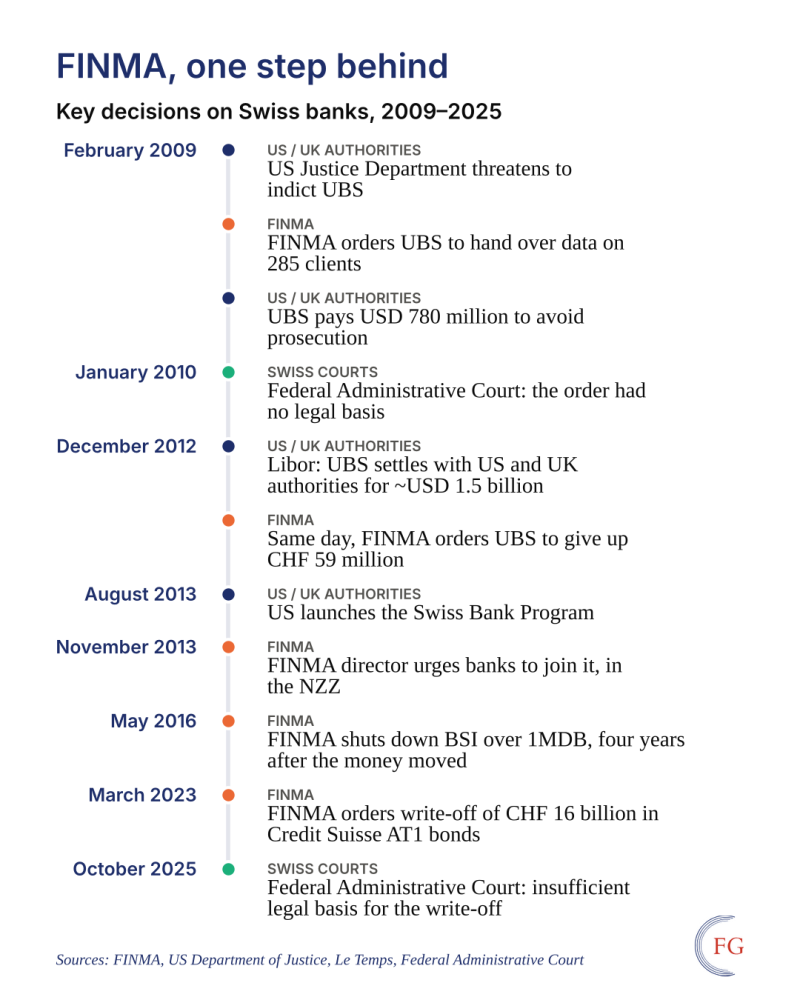
The only bank FINMA ever shut down was BSI, in 2016, over its role in the Malaysian 1MDB embezzlement scandal. That was four years after the money had moved, and only once the affair was public. Meanwhile Credit Suisse went from scandal to scandal. In the spring of 2021 it lost billions in two collapses within weeks of each other, the supply-chain finance firm Greensill and the investment fund Archegos. The weaknesses behind both were visible beforehand, yet FINMA opened proceedings only once the losses had landed.
The one time in those years FINMA put real pressure on Swiss banks, it did so on behalf of the American program. On 29 November 2013 Raaflaub published an opinion piece in the NZZ urging banks to join it and, if in doubt, to choose the category that came with fines. About 300 banks had ten days to tell FINMA what they intended to do. The banks read it as a threat, and ours was one of them. On 15 January 2014 Raaflaub announced he was leaving at the end of the month, "of his own accord". FINMA had moved when the pressure came from Washington, and it finally moved again when the pressure came from the banks.
Who runs FINMA
Mark Branson led FINMA from April 2014 to 2021. He is often called the best director the authority has had, and in a certain respect I think that is right. His appointment was dubious all the same.
Branson, a British citizen, joined UBS in 1997. In July 2008, as a senior executive in its wealth management arm, he appeared before a US Senate subcommittee and apologised for the bank's failures in its American business. In 2010 he joined FINMA as head of banking supervision. From then on, the man in charge of supervising every Swiss bank, UBS first among them, was a UBS veteran who had defended UBS before the US Senate, in the middle of an American offensive against Swiss banking. The problem was independence.
No public document says Washington had a hand in his selection. A former vice-director of the Swiss National Bank (SNB), whom I cannot name, told me that American preferences “were felt” in the appointment. Being a foreigner would normally have ended a candidacy for the top job at a Swiss supervisor, and so would thirteen years at UBS while it was under attack from the US Justice Department. That Branson was confirmed anyway, by a unanimous board, is the strongest reason to take the rumour seriously. Candidates come from a narrow pool of people acceptable to everyone who matters, in Bern and apparently among the Anglo-Saxon regulators, and whoever emerges has been chosen not to cause any of them trouble.
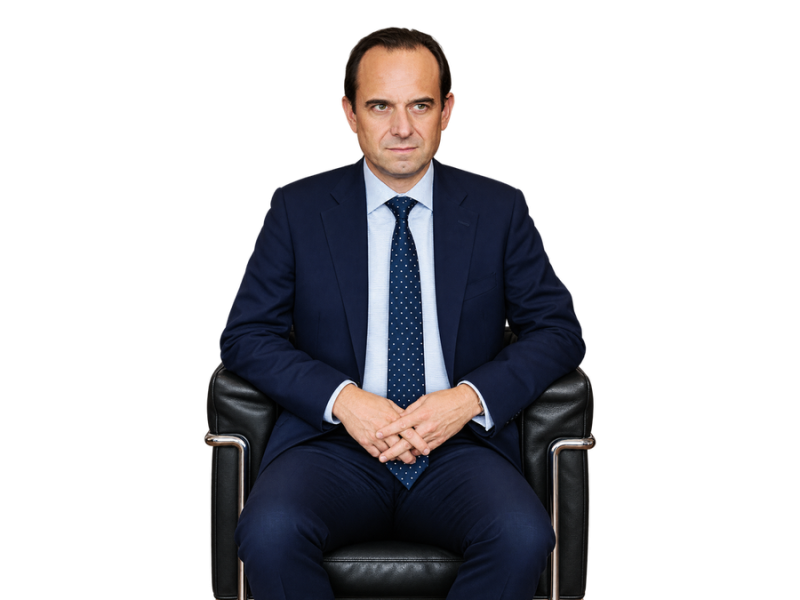
In March 2020, according to Blick, Finance Minister Ueli Maurer pushed out the board chair and had the vice-chair, Marlene Amstad, named in his place without a formal job advertisement. It was probably the biggest mistake Ueli Maurer made as a Federal Councillor. Once she took office in January 2021, Amstad began going around Branson to request information directly from his senior staff, and reportedly asked for a unit of her own to keep watch over him. A few months later Branson left to run BaFin, Germany’s financial supervisor. According to the NZZ, it was an open secret that he could not live with a chair who intervened so directly in the running of the authority. In a normal company, a chairman who goes around the chief executive and asks for a unit to watch him is the one who leaves. At FINMA the chair stayed and the director went.
The law gives FINMA's board president decision-making power over matters of major importance, and Amstad appears to have wanted a director who would not contest her. She got one. Urban Angehrn, Branson's successor, had been chief risk officer at the reinsurer Swiss Re. He had no experience of supervising a bank and was not the strongest candidate available. Tougher, better candidates were available, but they were a threat to Amstad. Urban Angehrn left in September 2023, citing “constant high stress”. In the very years in which Credit Suisse came apart, FINMA had no director with banking supervision experience, only a lackey of Amstad who administered rather than moved anything.
The Credit Suisse Catastrophe
FINMA's defenders like to point out that the parliamentary inquiry of December 2024 placed primary blame on Credit Suisse's own management. But supervision exists precisely for banks whose management will not fix itself, and the same inquiry found that FINMA's supervision, though intensive, had little or no impact.
By FINMA's own account, Credit Suisse met its capital and liquidity requirements. It died of a loss of confidence. Years of scandals and strategic drift led clients and investors to pull their money, and by mid-March 2023 the bank faced immediate insolvency. The refusal of US authorities to take on its American problems was, as one commentary put it, “a separate but equally decisive factor”. Neither FINMA nor the SNB did anything about the confidence problem, something they could easily have done. FINMA should have taken the lead and enlisted the SNB.
By 2022 the bank was visibly failing. FINMA stepped up supervision, issued warnings and listed hundreds of points requiring action, none of which restored confidence. It was just paper. When the run came in March 2023, the resolution plan Switzerland had spent a decade preparing for exactly this situation was set aside in favour of a unconstitutional, unlawful weekend merger with UBS. FINMA then ordered the complete write-off of about CHF 16 billion of Credit Suisse's AT1 bonds, a type of debt designed to absorb losses in a crisis, while shareholders still received something. In October 2025 the Federal Administrative Court ruled that FINMA had lacked a sufficient legal basis for that order. FINMA and UBS have appealed.
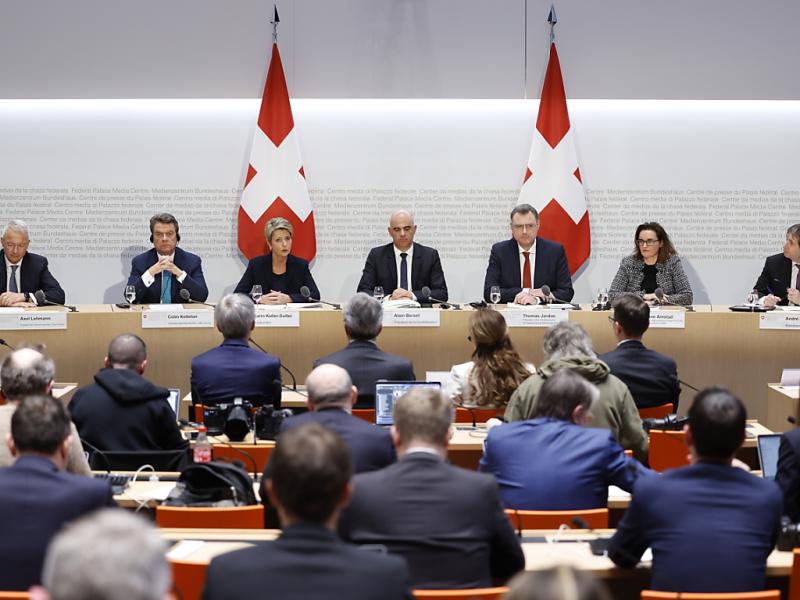
Not even the most obvious requirement was imposed: neither the Federal Council nor FINMA made a separation a condition of the takeover, so the decision was left to UBS, now the owner of Credit Suisse. It was a total failure of Karin Keller-Sutter and Marlene Amstad. UBS considered spinning off Credit Suisse's Swiss business, the domestic bank with its clients and deposits, and decided against it. FINMA was approving the merger in the middle of a crisis and had all the leverage it needed to insist, but it did not. The result is a single bank with a balance sheet about twice the size of Swiss GDP, and no convincing answer to the question now hanging over Bern, which is what happens if UBS gets into trouble.
I have chaired three banks and two listed financial institutions, and I know what it looks like when a supervisor has stopped supervising and started managing its own internal politics. A director with a supervisory instinct, backed by a chair who wanted supervision rather than control, would have gone into that weekend with a plan for the Swiss business, not just a plan for the merger. Credit Suisse would have come out smaller, and Swiss.
The small fry pay
While the country's biggest bank ran on borrowed confidence, FINMA was building a costly regime for the smallest players in the market.
Until 2020, independent asset managers answered to private self-regulatory bodies on money laundering. Since then they have needed a FINMA licence and are monitored by private supervisory organisations, which FINMA in turn oversees and charges a levy of about CHF 9.2 million a year. Each layer passes its costs down, and the client ends up paying for the supervisory organisation, the audit, the levy and the compliance staff.
The field has thinned. Before 2020 there were an estimated 2,000 to 2,500 independent managers. In late 2022 the NZZ reported that about 1,000 were giving up rather than apply. The industry association VSV counts 1,431 licensed managers as of April 2026. The industry attributes much of the decline to retirements and mergers, while critics say the compliance burden turned retirement into closure. According to the VSV, external supervision often costs small firms more than CHF 7,500 per employee.
All this produces an audit trail no serious money launderer will ever face. A launderer uses a large bank, a relationship manager and a trust in a jurisdiction that matters. He does not go through a five-person asset management firm. FINMA could not stop a systemic bank from losing the confidence of its clients, but it can force that small firm to document its procedures, pay for an audit and pass the bill on to its Swiss customers. FINMA is a total paper tiger: it generates costs for Swiss customers and no value whatsoever.
Conclusion: dissolve FINMA
After the worst banking failure in Swiss history, FINMA's answer has been to grow. Its average headcount rose from 583 in 2023 to 698 in 2025, and its operating costs from CHF 142 million to CHF 172 million, an increase of about a fifth in two years. Over the same period it introduced a circular on climate and nature-related risks for banks and insurers and set gender targets for its own staff. These are ESG and DEI programmes, and they have no place whatsoever in the work of a bank supervisor.
FINMA is also campaigning for new powers. In June 2025 the Federal Council agreed to propose fines, a personal accountability regime for senior managers and easier direct audits, to take effect no earlier than 2029. Yet FINMA already had the means to act, since it could confiscate profits and withdraw licences. When it finally used maximum force, in March 2023, it turned it against bondholders, not against a capital relief or a failing risk culture years earlier. An authority that did not use the powers it had should not be given more.
Since 2009, FINMA has found out late and asked for more under every director and every chair. Its directors came from Swiss Re, UBS and Swiss Re again, the very industry they were meant to supervise. Its first major order had no legal basis, and a court has found that its biggest crisis decision lacked a sufficient one. Its chair drove out the best director it ever had.
FINMA should be dissolved and replaced by a lean body of technically competent supervisors who go into the banks and do the work themselves instead of outsourcing it. Its board should not run operations, and its director should be able to stay in the job. It should keep foreign legal demands out of Swiss boardrooms, drop the circulars that have nothing to do with supervision, and measure its success by its findings.
«The Total Uselessness of FINMA»