


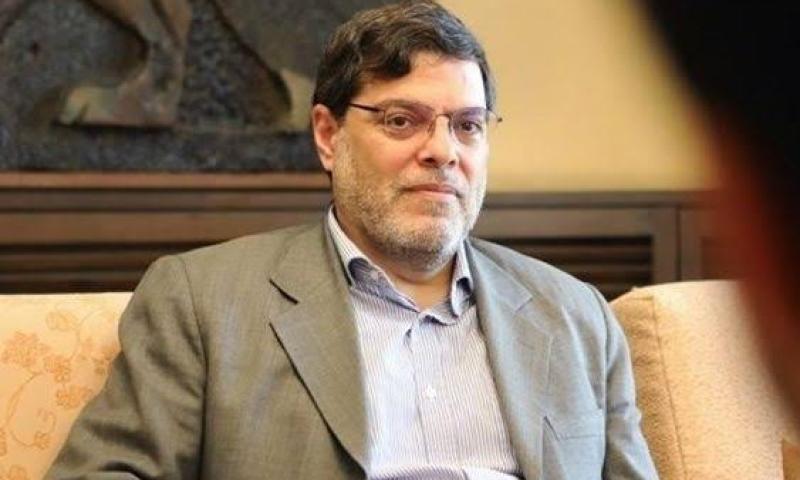
Iran’s victory over the US is a turning point in world history, says Mohammad Marandi


Editor’s Note: This article is published with the express permission of the author, Marco Fernandes (Brasil de Fato).
Amidst the immense political polarisation in the United States, there now seems to be something close to a consensus in the country. From Robert Kagan (godfather of the Neocons) to Tucker Carlson (a prominent voice of MAGA), via the former neoliberal-turned-developmentalist and advocate for the Global South, Jeffrey Sachs, and his friend, the well-known political scientist John Mearsheimer, they all agree on one thing: Iran has won the war. While Fox News political commentators lament the Empire’s defeat as set out in the Islamabad Memorandum – which provides, amongst other things, for the lifting of sanctions against Iran – and Bibi Netanyahu orders further bombings in Lebanon in an attempt to scupper that memorandum, Tehran is celebrating a historic achievement. This war, much like the Battle of Stalingrad, has already changed the world. Iran has not only become the dominant power in Western Asia – having demonstrated its military superiority over its neighbours, particularly Israel – but it can also lay claim to the status of a global power, since it has not only prevented the largest military apparatus in history from imposing its interests by force, but has also come to control, de facto, the planet’s most critical energy chokepoint, the Strait of Hormuz.
The agreement signed remotely this week by Presidents Donald Trump and Masoud Pezeshkian is still far from being implemented. In fact, both countries have agreed to set aside 60 days for negotiations, but there are considerable doubts regarding its viability. In yet another exclusive interview with Brasil de Fato, the Iranian intellectual Mohammad Marandi expressed the sense of mistrust felt by a large part of the country regarding the status of the agreement: “At this moment, the Israeli regime is massacring families, children and women every day [in Lebanon]. And whilst this continues and the Israeli regime does not back down, the agreement will not be implemented”. For this reason, the two delegations did not travel to Switzerland on Friday, as planned.
But Iran remains committed to the implementation of the agreement, for, as Marandi points out: “It is obviously a victory for Iran, because the United States has stated that it will return the stolen assets (…). It will lift the sanctions on Iranian oil and energy exports. They will lift the blockade of the Strait of Hormuz. And they will put an end to the genocide in Lebanon, amongst other things”. It remains to be seen what the negotiations will decide regarding the US’s main agenda, linked to Iran’s nuclear programme and what to do with the 430kg of uranium enriched to 60 per cent – a level close to that required to produce a nuclear bomb. Under the agreement, this uranium will be diluted domestically under the strict supervision of the International Atomic Energy Agency, rather than being sent to other countries – which represents yet another victory for Iran.
Finally, Marandi believes that his country “will step up its cooperation with the countries of the Global South, the BRICS nations and the members of the Shanghai Cooperation Organisation, and its control over the Strait of Hormuz will enhance its capacity to grow economically and to exert regional and global influence more than ever before”. As negotiations for the ratification of the agreement continue, Iran is preparing for one of the greatest events in its history: the funeral of the former Supreme Leader Ali Khamenei – martyred in the early hours of the war – the chief architect of the military capability the country has built up over the last four decades, which took the whole world by surprise: “It will be a massive funeral. He was very popular in Iran and much loved amongst supporters of the Axis of Resistance and the Palestinian cause. He led Iran to this victory (…) His insistence that Iran should stand up to the oppressor, defend the oppressed and preserve its sovereignty is something that has led the world today to view Iran in a new light”.
Read the full interview
Brasil de Fato: The ‘Islamabad Memorandum’ was presented to the world as a historic victory for Iran over the US and Israel. What do you think made the US agree to the terms of a memorandum so favourable to Iran? Is it an acknowledgement of Washington’s military and economic defeat?
Mohammad Marandi: The United States lost the war. They lost the military conflict. After 39 days of fighting, the Iranians emerged victorious. It was not merely that Iran survived. Iran defeated the coalition: the United States, the Israeli regime, Jordan, Saudi Arabia, Bahrain, Kuwait, Qatar and the United Arab Emirates. And, of course, the West as a whole supported them, as did the NATO countries. So, the United States became embroiled in a naval war, and that was a double-edged sword. As a result, the United States is destroying the global economy, and the Iranians have held out longer than they have. Therefore, the United States now needs an agreement. And the agreement is not a bad one. It is a good agreement, but the United States is not prepared to implement it. And if they do not implement it, Iran will not fulfil its commitments. At this very moment, the Israeli regime is massacring families, children and women, every single day. And as long as this continues and the Israeli regime does not back down, there will be no implementation of the agreement.
Brasil de Fato: Israel has not signed the memorandum and continues to attack Lebanon, with Netanyahu claiming ‘freedom of action’. Does Israel, in fact, have a veto over this agreement? At the same time, yesterday Vance delivered a harsh speech against Netanyahu and Trump even went so far as to say, surprisingly, that he might bomb Israel. Do you think the US will make an effort to force Israel to comply with the memorandum?
So far, there are no signs that the Americans will do anything to force the Israelis to halt the genocidal attacks against the Lebanese people and civilians. In fact, the father-in-law of a friend of mine, who was a postdoctoral researcher at Peking University, was killed this morning in the Israeli air strikes. He was at home and, along with other civilians, was trapped under the rubble. They all died. But, in theory, the Americans could of course stop the Israelis whenever they wanted to. The Israeli regime is entirely dependent on the United States. Yet the Americans have helped them carry out the holocaust in Gaza and the ongoing genocide in Lebanon. And they would like to see the Israelis continue to carry out the massacre and genocide. The only problem is that the actions of the US, as well as those of Trump and Netanyahu, have created a global economic crisis. And so, Trump’s interests diverge from those of the Israeli regime. The Israeli regime does not care about the global economy. It does not care if it collapses. And Trump, of course, has his fate tied to the US economy not collapsing. Therefore, the harsh words from Vance and Trump mean nothing to Iran. Ultimately, the only thing that matters to Iran is that the United States honours its part of the agreement. Otherwise, Iran will not honour its part of the agreement.
The 14-point Memorandum of Understanding (MOU) provides for the reopening of the Strait of Hormuz and the lifting of the blockade in exchange, above all, for commitments not to pursue nuclear weapons.
The Western media argues that Iran has “conceded nothing concrete” apart from the Strait of Hormuz. From Tehran’s perspective, what has Iran actually secured in this memorandum — and what remains to be resolved over the next 60 days?
The agreement, the Memorandum of Understanding (MOU), is clearly a victory for Iran, because the United States has stated that it will return Iran’s stolen assets. It will lift sanctions on Iranian oil and energy exports. They will lift the blockade of the Strait of Hormuz. And they will put an end to the genocide in Lebanon, amongst other things. Therefore, the United States does not gain much in return. The opening of the Strait of Hormuz is not a concession. It was already open before the war. It was the Americans who caused the situation to reach the point where it stands today. And it was the Americans and the Israelis who caused this global crisis. They committed genocide in Gaza and Lebanon and are now destroying the global economy. But from what we are seeing now — with the Israelis carrying out further genocidal attacks in Lebanon and murdering women and children — it is increasingly unlikely that the agreement, or the Memorandum of Understanding, will go anywhere.
The US says there will be no ‘toll’ at Hormuz, but Iran says it will charge ‘fees’ for services – just as Egypt does at Suez, Turkey at the Bosphorus, and Panama at its Canal. After all, what will be the new status of the Strait of Hormuz?
After the 60 days – if we even reach that point – Iran will levy charges. Iran controls the Strait of Hormuz and will charge fees for insurance, environmental protection and the protection of the ships themselves. Therefore, this is something the Iranians have decided to do, and they will control this trade. In future, they will not allow US Navy ships to enter the Persian Gulf to create another environment conducive to aggression against Iran. Therefore, the situation regarding trade in the Strait of Hormuz will not return to how it was before. Trade will continue, but there will be a fee for each ship and there will be no opportunity for the United States to use the Strait to militarise the Persian Gulf.
The memorandum promises an end to UN sanctions, but these were reactivated by the European ‘snapback’ in 2025, and the E4 makes the suspension conditional on ‘verifiable steps’. How does Tehran view Europe’s role – as a guarantor or an obstacle – in bringing about the lifting of sanctions? If sanctions are indeed suspended, could we witness an economic renaissance in Iran, which boasts a highly educated population and possesses high-tech sectors developed within the framework of the ‘resistance economy’?
Well, the West is losing its global standing and is in decline. And its ability to contain Iran is rapidly diminishing. Iran’s victory in this war – both on the battlefield during the 39 days of conflict and during the siege imposed by the US – which is destroying the global economy and sought to destroy the Iranian economy – was also a success. Iran has prevailed in this respect as well. That is why the United States sought a deal. And at the negotiating table, too, we saw Iran emerge victorious. And these, I believe, are all signs that the United States and the Europeans – especially the Europeans – are no longer really in a strong position to impose their will on other nations. They are in decline, while the Global South is on the rise, and I think that Iran’s victory was, as Robert Kagan, the godfather of the neoconservatives, pointed out in his article in The Atlantic magazine: the greatest catastrophe for the United States in its entire history. This was a turning point in world history, and I believe that, although we face difficult and sombre days ahead for the region and perhaps for the world, there is no doubt that Iran will be on the rise, whilst the West will continue to decline. Thus, Iran will step up its cooperation with the countries of the Global South, the BRICS nations and the members of the Shanghai Cooperation Organisation, and its control over the Strait of Hormuz will enhance its capacity to grow economically and to exert regional and global influence more than ever before.
How is the agreement regarding the $300 billion in investment for the reconstruction of Iran and the strengthening of its economy supposed to work?
The $300 billion is essentially a way of circumventing the sanctions regime, hypothetically, because the United States cannot block investments. This is not money that will be transferred or handed over directly to Iran. But it means that, if foreign investors invest – assuming there is an agreement – the United States will not be able to prevent the investment. As regards Iranian assets, I understand that Iran is receiving this money. But I have no definitive confirmation. However, it does appear to be happening.
In April 2026, Russia and China vetoed a Security Council resolution — proposed by Arab Gulf states and supported by the West — which treated Iran as the sole source of tension in the Strait of Hormuz. What role did the partnership with Moscow and Beijing play in reaching this agreement, and how does it shape Iran’s negotiating position going forward? Does this understanding with the US reorient Iran towards the West or consolidate its strategic anchorage in the Euro-Asian axis?
I do not believe that Moscow or China played a significant role in this agreement process. But the relationship between Iran and Russia, and between Iran and China, is clearly evolving and strengthening. And for obvious reasons: both because they are natural partners, and because of the West’s antagonism towards them all. But Iran’s current agreement with the United States — or, to be more precise, the Memorandum of Understanding (MOU) with the United States — does not distance Iran from its close friends and partners within the global majority. In fact, I do not see Iran’s relationship with the West improving in the slightest. The United States is simply incapable of behaving like a normal country, and the Europeans are a hopeless lot who are becoming increasingly irrelevant. Therefore, Iran’s future lies not with the West, but with the global majority.
The funeral of former Supreme Leader Ali Khamenei is being organised for the first week of July. Could you explain to us the political and religious significance of this event, how many people are expected to attend the ceremony, and what image Iran should project to the world through this?
It will be a massive funeral. He was very popular in Iran and much loved amongst supporters of the Axis of Resistance and the Palestinian cause. He led Iran to this victory. He built up Iran’s capacity to defeat its enemy, the aggressor, in this war. He defeated – indeed, he led the defeat of – the Israeli and American regimes during last year’s 12-day war and, despite his martyrdom, it was what he had prepared that led Iran to victory in this far more aggressive and far broader war that was imposed on the Iranian people. His support for the oppressed throughout the Global South — whether in Latin America, Cuba, Venezuela, Nicaragua and elsewhere, as well as in Palestine and southern Africa — is known to all. His insistence that Iran should stand up to the oppressor, defend the oppressed and preserve its sovereignty is something that has led the world today to view Iran in a new light, seeing beyond Western propaganda, and to view Islam — and, in particular, Shia Islam — as an ideology of liberation and resistance against global hegemony and global oppression, and as an ideology that supports the oppressed, wherever they may be.
«Iran’s victory over the US is a turning point in world history, says Mohammad Marandi»